When is it OK to Kill People?

Important and possibly legally relevant information: I am an author and critic (which feels a bit grandiose for “Selling my opinions for money,” but there you go). I spend a lot of my time thinking about works of fiction in various mediums, and fictional situations of my own devising – including violent ones.

Fiction often presents situations that occur in the real world, or that are analogous to real world scenarios, and so to perform my author and critic roles I am sometimes called upon to compare the ethics of real and fictional situations, as a mode of analysis.

This is, of course, theoretical. My personal position is that I do not condone violence, and would never encourage or endorse anyone to commit an act of homicide. Also, if you are a member of any armed forces whose country is not currently being directly invaded by another army, you should desert. Go AWOL. I’m serious. Go home, hug your family.

Right, now that we have established that I am fully within the acceptable Overton window of our times and am not going to be saying anything that intends to or could be interpreted as inciting any kind of violent illegal act:

When is it okay to kill people?

I most recently asked this question after seeing the end of the new Supergirl movie. Spoilers, for the movie and the comic, by the way.

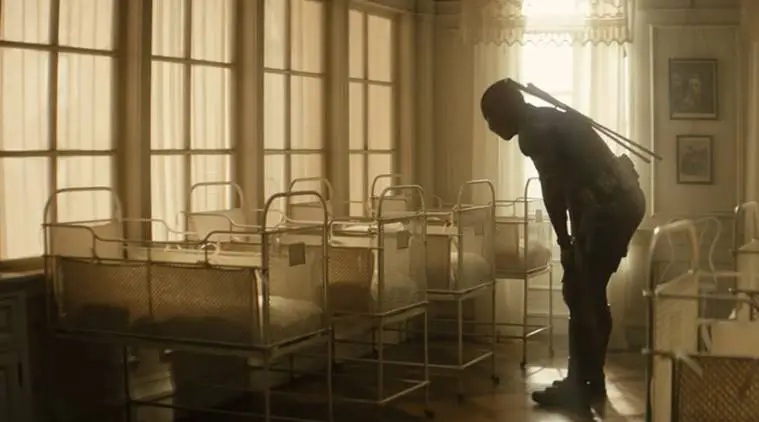
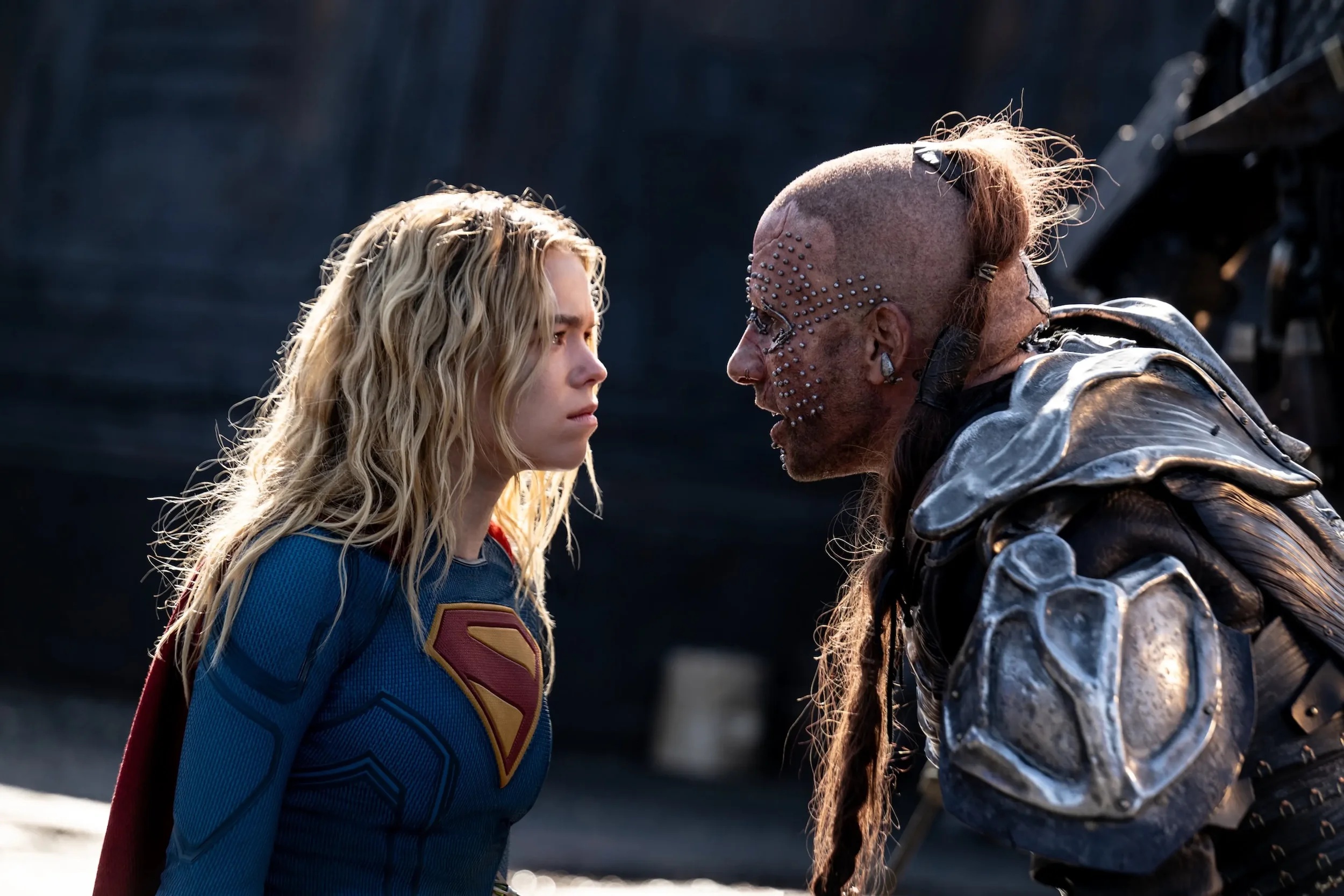
The film is about Supergirl, and a less-super girl named Ruthye, chasing down an evil space bandit. Ruthye is seeking vengeance for the murder of her family. Supergirl is seeking an antidote to the poison the bandit put in her dog.

Having tracked the bandit across the galaxy and bested him in combat, Supergirl tells her companion not to take the murderous revenge she set out on this whole quest to achieve. The reason for this, Supergirl argues, is that taking someone’s life also takes something from the killer. That having that stain on Ruthye’s conscience would destroy her, and that the best revenge she could take is only to live well.

Ruthye takes this advice to heart, and leaves her quarry lying, alive but bleeding on the ground, to go and lead a good life.

Then soon as she’s out of sight Supergirl picks up her sword and stabs him in the neck.

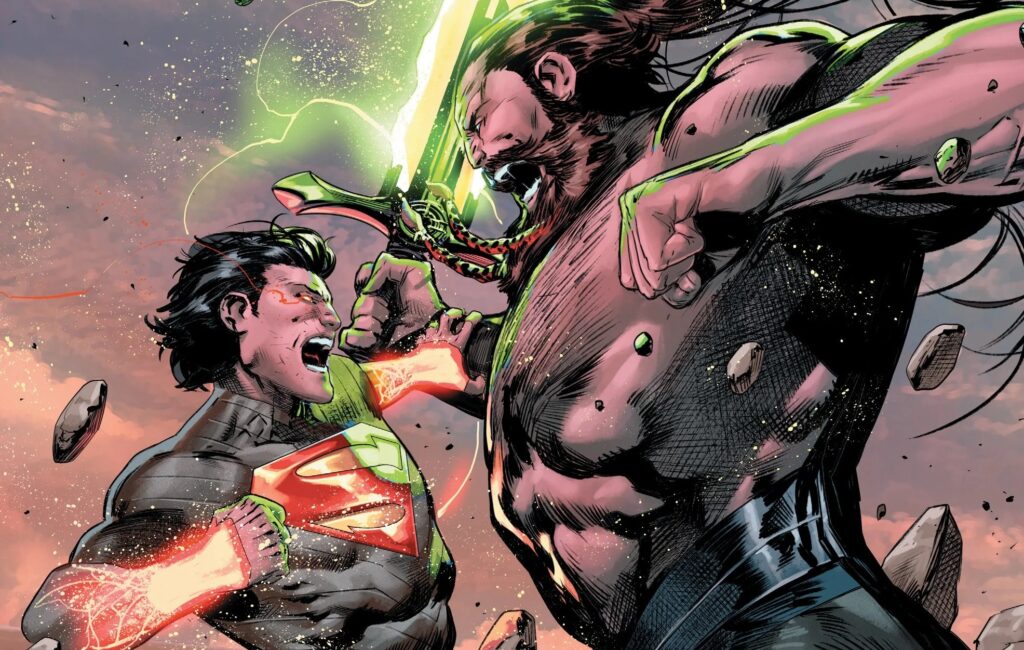
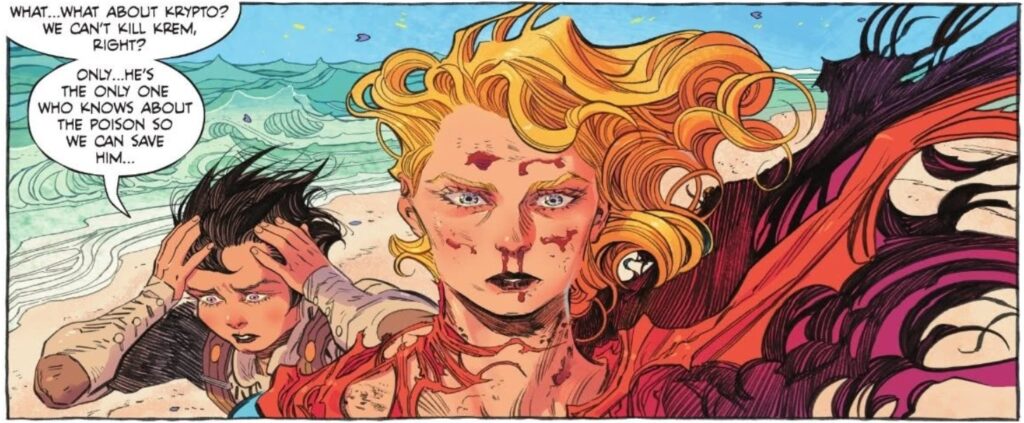
This is a change from Supergirl: The Woman of Tomorrow, the comic the movie is based on. That story begins with Ruthye describing how she saw Supergirl run the bandit through with her sword, but we later discover that was a fiction to divert his followers into chasing Supergirl for revenge rather than trying to free the bandit from the phantom zone. In this version, Supergirl didn’t even need the antidote for Krypto – she lied about that as an excuse to keep an eye on Ruthye.

And the movie suffers for the change. It strips Kara Zor-El of a couple of layers of complexity to turn her into yet another morally-grey-badass-with-a-heart-of-gold Han Solo character. Now she’s here to add a little darkness and edge to Superman’s shiny-spotless clean boy scout character. You know, like Batman, and Lois Lane, and literally every other character Superman knows.

And while we’re at it, let’s talk about Superman. There are two big punch the air climaxes in Gunn’s Superman. One is where Superman confronts Lex, and gives a powerful speech about humanity, empathy, and the strength that comes with vulnerability.

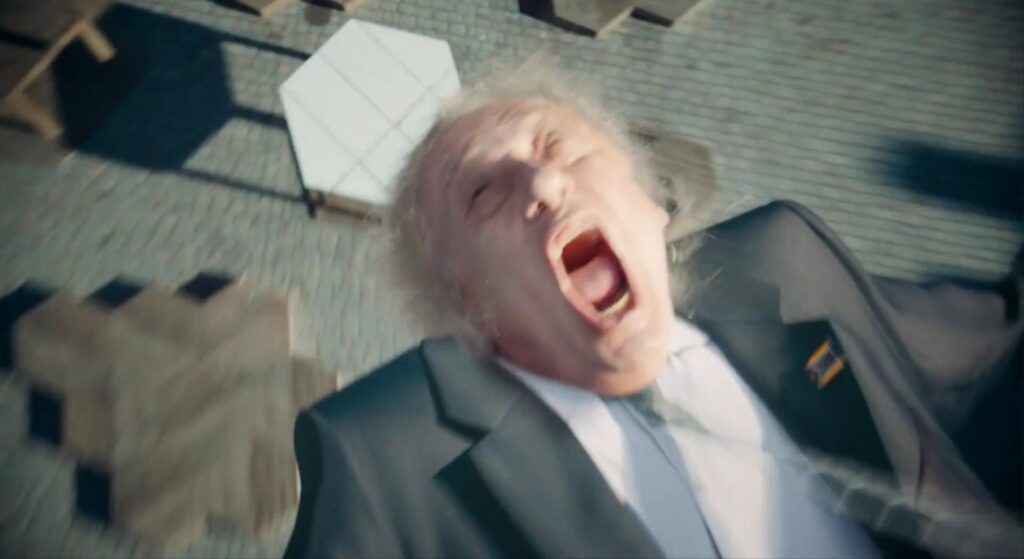
The other is where the Evil Dictator (who is definitely not a stand-in for Netanyahu) sneers at Hawk Girl that she won’t kill him because she’s too weak, like Superman. She sneers right back that “I’m not like Superman” before letting him fall to his death.

It’s a punch the air moment. Didn’t you punch the air? The guy was definitely a bad guy, through and through, responsible for horrible things, and now he’s dead and felt a bit stupid at the same time. Hooray!

It is a favourite beat in superhero movies. Deadpool ends with Colossus telling Deadpool to spare the villain’s life, because that’s what heroes do, only for Deadpool to decide he’d rather do killing. Batman Begins has the “I won’t kill you, but I don’t have to save you” line. Doctor Who’s River Song loves running into people who know all about the Doctor’s no-guns rule so she can look smug when she shoots them (and we get the impression the Doctor fancies her for this reason).

And you know what? (Please refer to the opening paragraphs of this article) Sometimes people need killing.

A Short List of Deaths the Cultural Consensus Can Get Behind

Nobody is going to object to shooting Hitler, providing he’s an adult and we have a spacetime continuum that can handle it.

Again, referring you to the opening paragraphs of this article, we should note that from a strictly utilitarian perspective, this lawsuit by UnitedHealthcare shareholders accuses it of “pivoting away from profit-boosting strategies that led to higher-than-average claims denials” in the wake of CEO Brian Thompson’s assassination. It is reasonable to conclude that there are more people alive today than would be if this crime hadn’t happened.

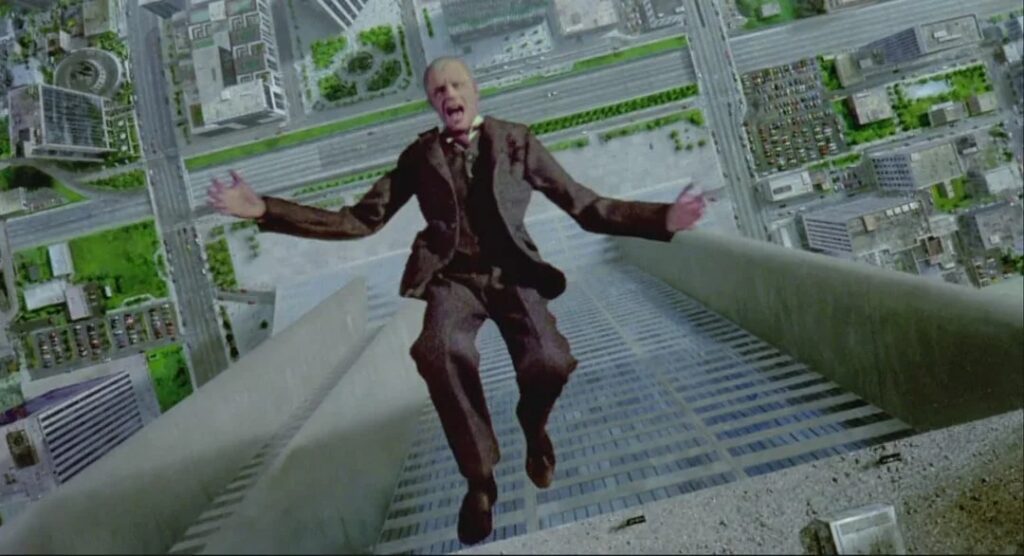
A short, randomly selected list of films that end with a CEO being murdered and this being considered the heroic climax of a movie: Robocop (1987), The Running Man (1987), Tomorrow Never Dies (1997), Iron Man (2008), Iron Man 2 (2010), The Running Man (2025). In half of these films, the CEO is unarmed when they are killed.

The murder of an evil person is not an inherently utilitarian benefit – the recent violent death of a hateful, cruel and bigoted politician has done nothing but add weight to a worse (or at least more influential) politician’s paper-thin defence of accepting certain huge sums of money.

But we are not required to mourn them, and although the standard is not applied uniformly, there are deaths that, collectively… we don’t mind. If I say, with zero context “It might happen today” you will nod your head and nothing more need be said on the matter.

People to the Left on social media are often berated for appearing to celebrate the deaths of people they dislike (regardless of whether said people wished for, encouraged, or actively caused the deaths of others). Then again, if I say “I’m glad Sadam Hussein is dead” or even “I hope Putin falls out a window” I will not be barred from any social media platform regardless of what their policies state.

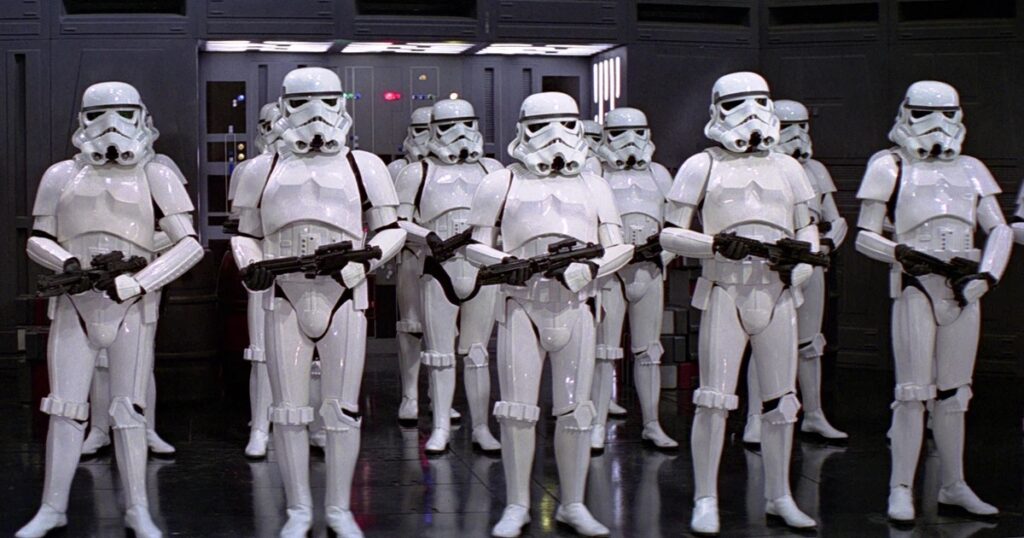
To take us to a more comfortably fictional example, let’s talk space opera. We all feel fine watching the foot soldiers of a Space Imperium get gunned down or Wilhelm Scream their way off high gantries.

If you’re wearing armour and carrying a gun that you are using to kill other people as part of an invading army or a domestic suppression of resistance against oppression, like Stormtroopers, or Nazis (in an Indiana Jones or Captain America movie, because we’re talking about fiction), then as an audience of that fiction, we accept that it is morally right to shoot back with intent to kill, to the point where we will let our children watch it happening.

One imagines we would equally apply that moral code in a comparable real world situation, should one arise. To send armed soldiers into a place with the intent to kill people, and then call the people there terrorists if they shoot back, is villain-coded behaviour.

Are You Killing People Because You Have No Imagination?

So, to answer our original question: It is morally okay to kill people a lot of the time in a wide array of situations, in fiction.

At which point it’s fair to ask why anyone would complain about Supergirl stabbing that guy in the neck, or Hawkgirl dropping that dictator, or Superman snapping Zod’s neck (or chucking him off that crystal to his death in the original Superman II)?

To answer that question, maybe it’s worth stepping away from the bright, colourful, idealistic version of Superman we see in James Gunn’s movie, and instead look at the darker, grittier, more morally grey take on the character that we see in DC’s darker, grittier, more morally grey Absolute universe.

We’ve all seen the massive, chonky, spike-covered Batman of this line and mocked the self-conscious edginess of the whole endeavour, but irritatingly, the Absolute comics are where the best superhero action in the Marvel/DC duopoly is happening right now. Absolute Martian Manhunter, for instance, is a synaesthesia-fuelled roller coaster that talks about politics, media, mental health and existentialism.

This universe’s Superman was never raised by the Kents. He came to Earth a refugee who still remembered being raised by a family in Krypton’s oppressed and exploited working class. He goes to corporate-owned mines to rescue exploited workers and put himself between them and the guns of corporate-owned enforcement goons.

He’s angry, and confused by an alien world while also being all too aware of the dark parallels it has with his own. He has no wholesome Clark Kent persona to retreat into and connect to the humanity he protects.

And he never kills. Not humans, not superhumans, not alien monsters.

When the creature known as “Parasite” tries to absorb the energy of the whole population of Metropolis, Superman ends up keeping it as a pet, feeding him little bits of his own energy to sustain it.

He defeats Ra’s Al Ghul (the same character Nolan’s Batman “doesn’t have to save”) who in this continuity is the head of a world conquering corporation with a side of fascism, and Ra’s gives Superman every reason to kill him. Superman puts him in a cell, and then comes to visit regularly to read him poetry written by the children who suffered under his rule. Eventually, Ra’s even begins to repent – just as the bandit king from Supergirl: The Woman of Tomorrow does with enough time in the phantom zone.

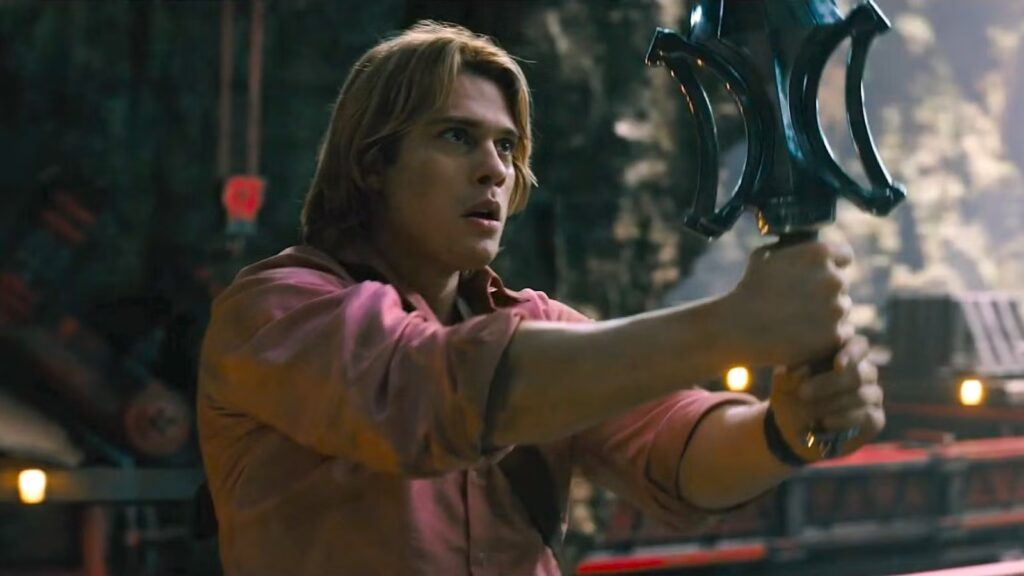
Whatever you think morally, narratively it’s a more interesting outcome. Alternatively, returning to the cinema, this year’s Masters of the Universe movie spent a lot of its run time setting the stage for a subversion of the ultra-macho underpinnings of the action figure range.

The movie’s Adam works in HR conflict resolution. When he first receives “the Power of Grayskull” he is appalled that he ripped off a someone’s arm “and killed all his friends.” His mentor, Man at Arms, shows a dark end point for toxic masculinity drenched in alcoholism and self-loathing. The film even points at Skeletor’s villainy being rooted in his fear that anything he has can be taken away if he doesn’t control everything.

But then the climax of the film shows Adam beating up Skeletor in slow motion, until he eventually murders Skeletor dead as Skeletor is on his knees begging for his life. It not only casts your hero in a villainous light, it’s incredibly boring. Punching. That’s it? That’s what you’ve got to offer?

But what these stories make clear is that if you’re going to keep your villain alive, you have to do something with them. This summer’s Spider-Man: Brand New Day shows us Peter Parker risking his life to save that of the head of Super ICE, which is fine because he’s played by Tramell Tillman and nothing bad should ever happen to him. But the film never suggests that anything further needs to be done to restore justice – as when the last MCU government organisation turned out to be evil and Nazi-esque, we just trusted the Good Real World US Government Agencies to come in and arrest the Bad Fictional One.

But How Do They Know You’ve Won?

Terry Pratchett is a writer whose characters generally dislike killing, but are not averse to it when it becomes necessary. He is the person who wrote that if someone is going try and kill you, you should hope it is an evil man because “A good man will kill you with hardly a word.” But he really hit on something with the line “There was no sense in killing your enemy. How would she know you’d won?”

Narratively, where is the satisfaction in just ending your villain’s existence? How does that win the argument? How does it say anything?

I’ve said this before, but people who think Superman is boring miss the point of the character. He is all powerful and morally pure because it means you have to be really lazy to use any of the predictable story routes. A Superman with less power is just another flying guy who can punch good. A Superman with all the power but a wobbly moral compass can simply vaporise any obstacle in his path. But when he is both, it opens up new questions.

Questions like, what do we do with the bad guy if he’s powerful and unrepentant and has the potential to do enormous harm?

Killing him isn’t the answer to that question. And it is a question we need to answer in the real world, because killing is not usually actually desirable. Killing in fiction dodges the question. It just ends the story quickly without leaving any last consequences to deal with (This, ironically, makes it the exact opposite of what happens when you actually kill someone).

I know the appeal of this as well as anyone. I’ve written an entire series of novellas about a spaceship that literally kills everyone at the end of each story, precisely so that I don’t have to worry about the consequences later. These stories are chock full of smaller murders too. People kill callously, pragmatically, reluctantly, ambiguously. I’ve had people kill out of self-defence, or because they wanted to make a point.

I don’t think I’ve ever written a triumphant, punch the air, kill-the-bad guy and feel good about it heroic murdering. I’m not saying I never will, but a bit of me recoils from the idea, from the easiness of it, from the fact that it doesn’t win the argument.

I’ve often found that even having characters do a murder and feel bad about it doesn’t really provide any answers to the questions your story asks (although sometimes you don’t need those answers, and it can still be an enjoyable catharsis).
But What If the Killer Is Sad Afterwards?

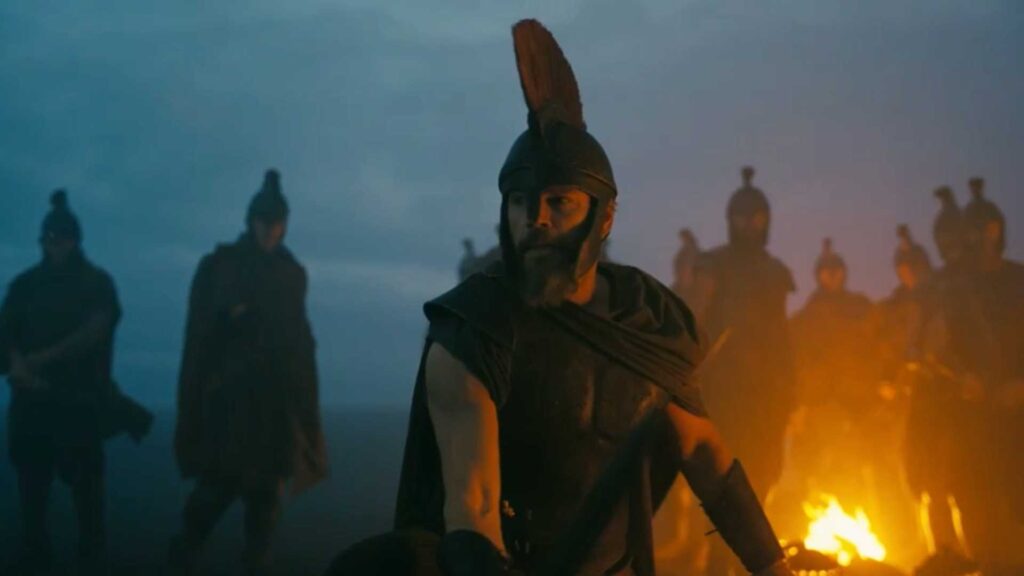
Look, you’ve come this far, I’m grateful for that. But I’m also sorry, because nearly 2,000 words into this article you probably thought you were safe from discourse about The Odyssey.

But The Odyssey shines a great light on what we’re talking about here.

Mainly, Emily Wilson’s brilliant and already infamous takedown of the movie:

“We are not shown that war or killing are bad, only that good men sometimes feel bad about it – a very different point.”

It is part of a proud tradition in American film making – films about why wearing armour and carrying a gun that you are using to kill other people as part of an invading army, can make you feel really sad. And isn’t that the true cost of war?

I started writing this trying to unpick the storyteller’s perspective when telling stories that necessarily involve violence and killing but ultimately, it’s tied to the awkward, and perhaps pretty obvious double standard that our culture is built around.

We have laws that prevent civilians killing people, and that’s good. However I feel about any individual death, I don’t want to live in a society where somebody can kill somebody else because they think it’s a good idea. I would like that ethical principle to extend to “denying people essential healthcare” and “taking away government benefits they need to stay alive” and, y’know, the entire category of Social Murder. On a civilisational level, I think collectively we should be trying to keep people alive (there are genuinely important questions here around the ethics of assisted dying, but an honest conversation about those isn’t really possible until “staying alive” is a real option).

But just as we have those laws to prevent us from killing people, we (meaning us and all the various powers that make us complicit in what they’re doing) need to make sure that when soldiers and police officers shoot people, that is a different act from murder. If you are killing someone in a professional capacity, we need that to be different from murder.

This isn’t a huge insightful breakthrough, we all know this. But stories are a place far enough outside of reality that the awkward questions start to get asked even if the storyteller doesn’t want them asked. We know, because we’ve been told, that killing people is okay if you’re in a uniform. And we kinda know that a red miniskirt, a cape and a big “S” across the chest is a uniform. Except when it’s not, and suddenly the distinctions start to look as fictional as Supergirl is.

Chris Farnell is the writer of Fermi’s Progress and Fermi’s Wake, two collections of stories about a spaceship that kills a lot of people, like a lot of people.

To read Fermi’s Progress, buy the season pass from Scarlet Ferret (which includes all four Fermi’s Progress novellas in one volume), or the paperback from Amazon.

To read Fermi’s Wake, buy the Fermi’s Wake season pass at Scarlet Ferret, buy the complete e-book at Amazon, or get all the individual novellas in the series from Amazon here.

And this December, you can also read the Christmas special, A Very Fermi Christmas, which has fewer deaths (it’s Christmas).